Joining smooth fabrics
JOINING PLAIN FABRICS

Most tailoring requires the ability to combine parts of the fabric into one larger whole.. Such connections are usually made using single flat seams. However, if a smooth and strong seam is needed, we use an overlap or French seam. …
Cutting the material

CUTTING MATERIAL

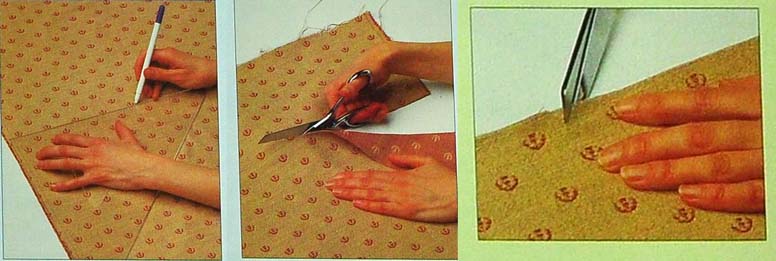
It is not difficult, if we do this carefully and have sharp tailor's scissors. It is most convenient to cut the material on an even, flat surface. With large patterns, it can be a clean floor. Do dokładnego wykrojenia pożądanej formy potrzebne są …

Preparation of the material

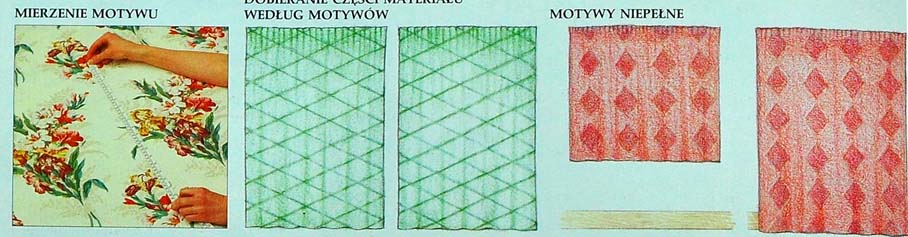
Before commencing tailoring work, familiarize yourself with the principles of proper material handling. You have to learn how to calculate the amount of raw material needed, cut the parts and connect them correctly. If we use patterned material, parts of the product should be joined in this way, aby po …

Quilting

We use quilting not only to add an additional warming layer, but also for decorative purposes. We put insulation between two layers of fabric and sew the edges together. You can also baste the thermal insulation layer to the left side of one of the pattern parts, połączyć obie części prawymi stronami …

Overlap seam – Topstitching

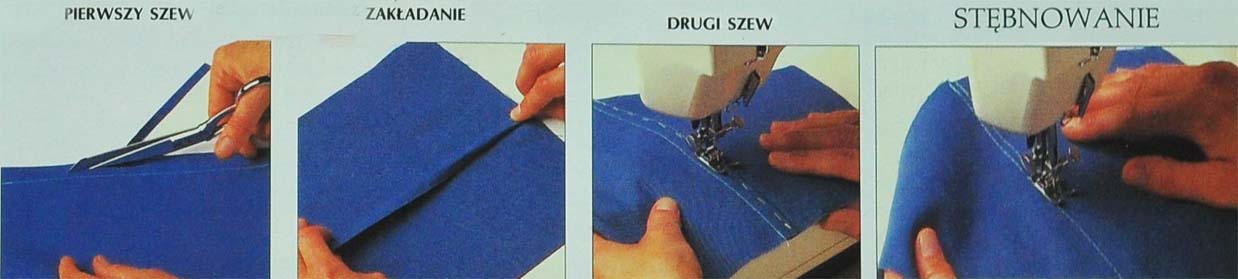
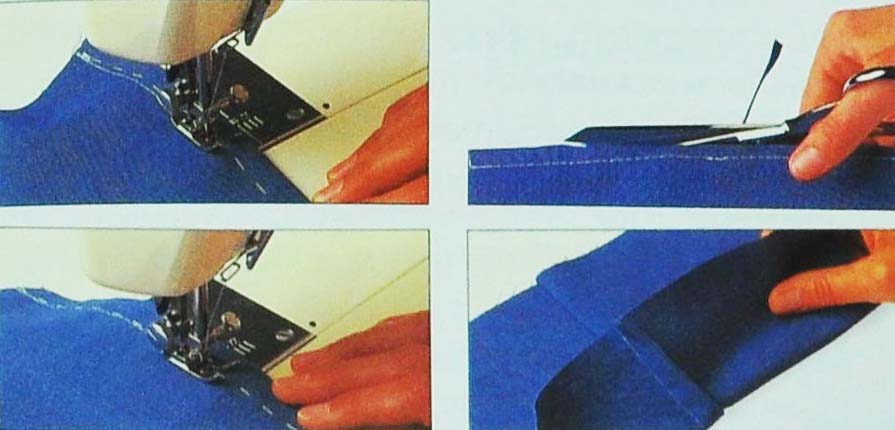
Overlap seam – This seam is most useful when sewing products, which must be strong and have a smooth exterior finish, and therefore mainly with upholstery. However, if you use these types of stitches, you will see a stitch on the right side.

1. …

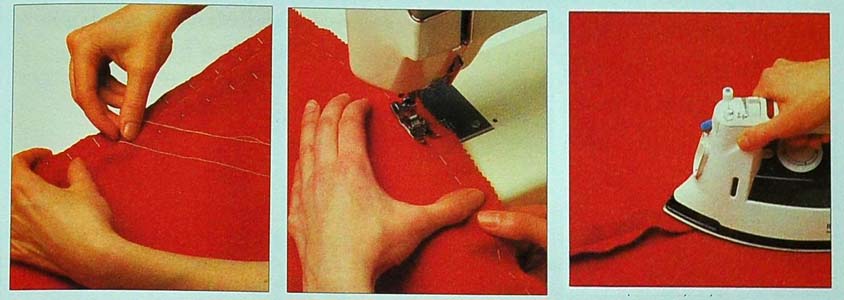
French seam (inverted)

French seam (inverted) – It is a strong seam, intrinsically protecting against fraying of the material. No additional stitches are visible on the right side of the garment. However, it can only be used to stitch straight edges; it requires a reserve of approx 1,5 cm. …

Edge finishing

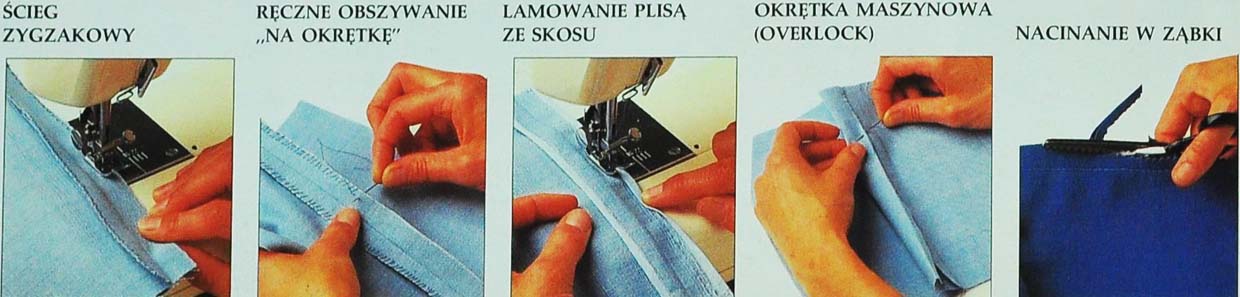
Non-hemmed edges of the fabric should be protected against fraying. This is especially important in furniture upholstery, which must be durable. You can protect the edges by sewing them with a swivel by hand or by machine, piercing with a zigzag stitch, lamując plisą ciętą ze skosu lub nacinając …

Basic seams

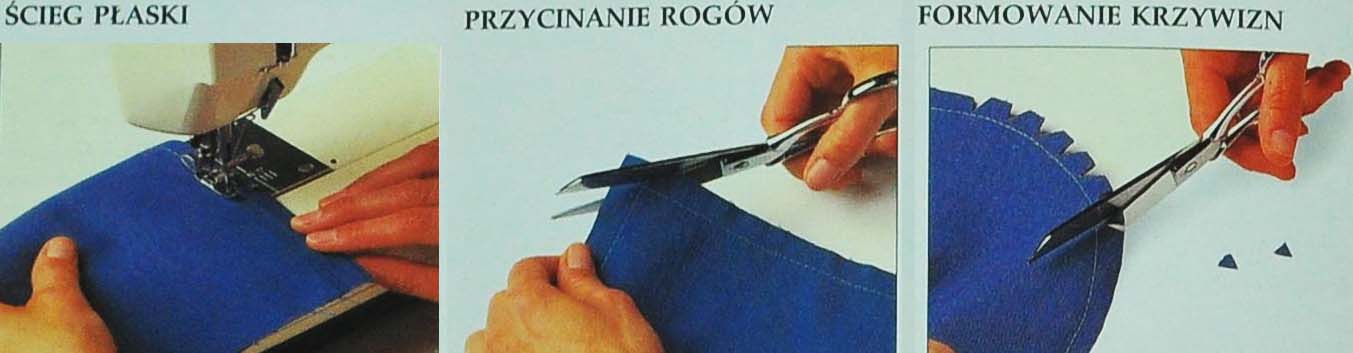
Knowledge of hand and machine sewing techniques is essential for all tailoring work, that the finished product is durable and carefully finished. It is also important to choose the right stitch to connect the cut parts of the fabric. We can choose stitches, French, maritime (overlock), płaski …

Stitch “behind the needle”

"AFTER THE NEEDLE."”

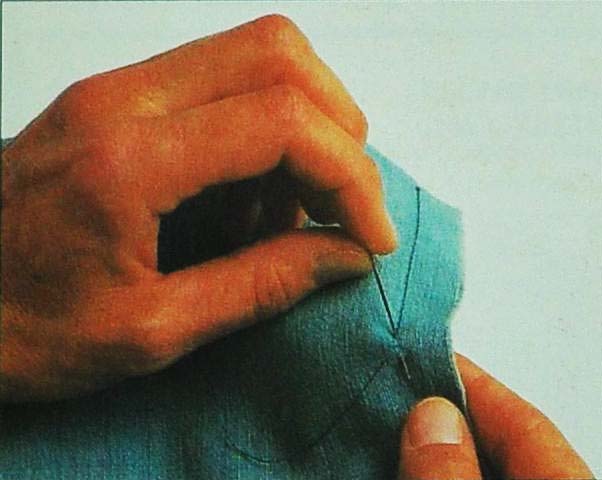
It is used to perform strong, permanent seams in places difficult to reach by the machine, np. in tight corners. You can also sew zippers with this stitch, if we cannot sew them on the machine. The seam is made "behind the needle" stitch” is more certain, …

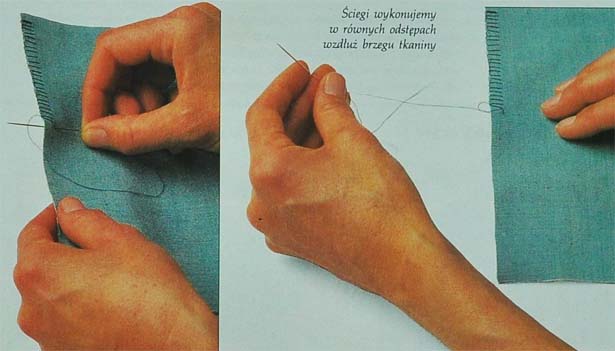
Knitting stitch

It is mainly used for finishing raw edges of the fabric. It can also be used as a decorative stitch and then we use a thick thread. An additional effect is given by the use of threads of the same color as the material. Gęstym ściegiem dzierganym obrębiamy także dziurki od …