Transparent and mesh curtains. Transparent materials are perfect for curtains, if we only want privacy during the day. Curtains of this type, when drawn, cover the window, while allowing daylight into the room. Transparent and mesh fabrics, available in various thicknesses and colors, they can be the only curtains of a given window or constitute additional day curtains, complementing curtains made of opaque material. We finish them at the top with a ready-made crepe tape or by hand. We hang them on a light rod curtain or spring wire covered with plastic, attached to the screws with an eyelet in the frame.
 MAKING Curtains
We choose the shirring tape for transparent or mesh curtains and calculate the amount of material needed. We choose a wide material for transparent curtains, not requiring many joins. We cut straight, using the pulled thread method. With the help of a new one, a thin needle, sew the parts of the curtain on the machine with garter stitch. You will also need proper hooks and basic sewing supplies.
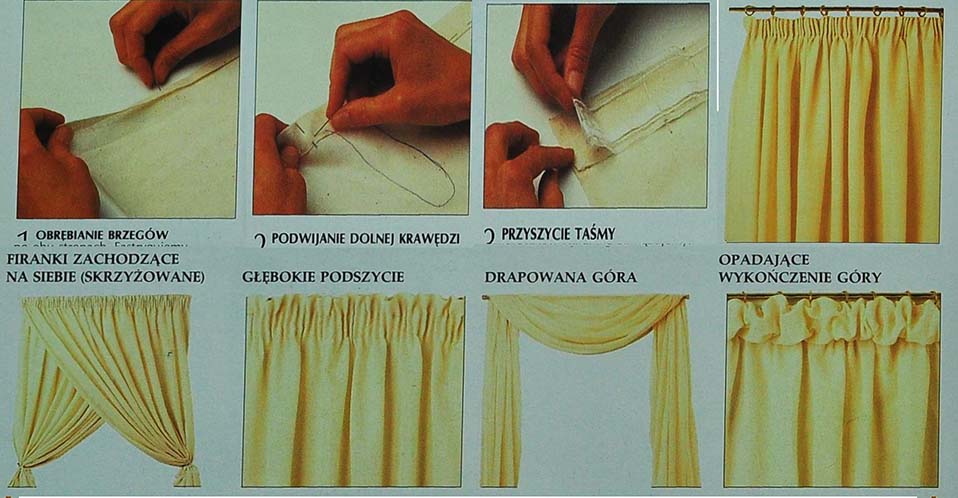
1 SHEARING OF EDGES – We put the fabric on a large flat surface. To even out the edges, pin a double width fold with pins 1 cm on both sides. We baste, we sew and iron.
2 WINDING UP BOTTOM EDGE – At the bottom, we put a double width hem and pin it with pins 2 cm. We baste, we sew and iron. At the top, we put the fabric on the width of the selected shirring tape and pin the tape with pins.
3 SEWING TAPE – We back the unfinished edges of the tape 2 cm and sew to the left side of the curtain. We sew the ends of the tape with threads across the leading edge of the curtain. We take the strings and place the fabric evenly across the entire width. We carefully tie the free ends of the strings.
OTHER SOLUTIONS
The ease of sewing and the lightness of transparent fabrics cause, that we can very quickly make curtains selected from many existing patterns and hang on windows or doors. Simple décor can be quickly achieved with a narrow tape or tunnel. More sophisticated ideas include draping the curtain on a rod or cutting very long curtains, so that the fabric cascades onto the floor.
Curtains overlapping each other (CROSSED)
We line both curtains with one shirring tape. The oblique edge should be equal to the diagonal length of the window, and the side edges - to the length of the window sill.
DEEP LINING
We use a wide shirring tape for transparent material. Such deep ruffles look effective and elegant with long curtains.
DRAPED TOP
We drape the transparent material on a bar or bar over the window or other opening. We will get a great decorative effect.
FALLING TOP FINISH
The curtain is hung on a metal pole. We sew the tape below the top edge of the fabric, so that the wrinkle falls forward revealing the stone.